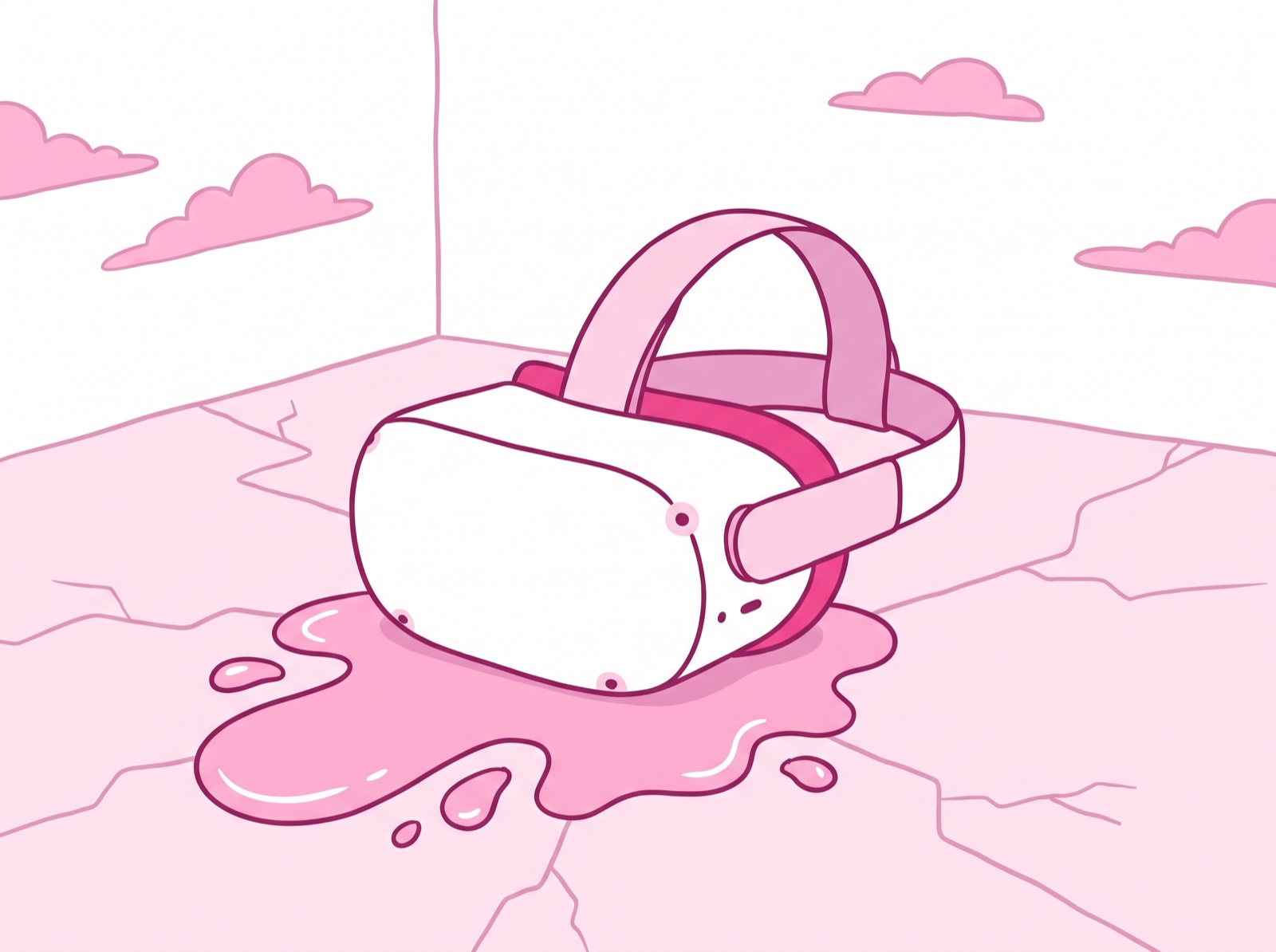
Short answer: no. Longer answer: it depends what you thought VR was for.
The 2020 hype
When the world went inside in 2020, VR briefly looked like the answer to "how do we be together apart?" Meta rebranded its entire company around the metaverse in 2021, and everyone from Microsoft to Nike rushed to plant a flag in virtual worlds most of their customers never asked for. For about eighteen months, VR wasn't a technology — it was treated as inevitable. That was never going to hold.
Where it stands now
The correction has been real. Meta Quest shipments fell over 40% year-over-year, and smart glasses now outsell VR/MR headsets roughly 3 to 1. If you bet on VR replacing your phone or your office, that bet is currently losing to a much less dramatic pair of glasses. But that's the death of VR-as-mass-consumer-platform — not of VR as a tool. And as a tool, it does three things nothing else quite does.
It makes you feel something
VR's real power is presence — the brain treats what it sees as real enough to trigger a real emotional response. That's exactly why horror is one of VR's most successful genres: fear doesn't land through a screen the way it lands when you're standing in the room. Brands are catching onto the same principle. An activation that actually makes someone's pulse rise isn't competing with a video ad — it's playing a different game entirely.
It simulates what nothing else can
Surgeons now rehearse procedures on a patient's own imaging in VR before the first incision — and the plan changes in over a third of cases. Volvo reviews vehicle designs at full scale before a physical prototype exists. It's the only medium that lets you rehearse the costly, dangerous, or otherwise impossible safely, in full scale, before it's real.
It lets people step inside a story
This is where brand work lives — not telling someone about a product, but letting them experience it from the inside: walk through the story, become part of it instead of watching it happen to someone else. That's why VR activations at fairs and launches get remembered — and rebooked — long after "metaverse strategy" headlines faded.
Mixed Reality is the honest middle ground
MR doesn't ask anyone to leave the real world — it layers the digital on top of it: a product that appears on the table in front of a client, an installation that reacts to the people actually in the room. Lower barrier, shorter learning curve, often the better tool for events and retail.
The real question was never "VR or not." It's what a brief actually needs — full immersion, an MR layer, or something in between. The companies still chasing "metaverse strategy" missed that question. The ones getting real value from immersive tech in 2026 asked it first.
VR isn't dead. The version sold to you in 2021 is.